

“Metal fabrication” is a term that gets tossed around a lot—especially by those of us who live and breathe this work every day. But for folks outside the industry, it can feel like one of those catch-all phrases. So let’s roll up our sleeves and break it down.
The world of metal manufacturing is vast. It includes all kinds of processes:
Metal fabrication is just one part of this bigger picture, but it’s an important one. And within fabrication itself, there’s a wide range of specialties and niches—too many to possibly name in one article.
With that in mind, let’s take a look at a few of the big categories we work with:

Picture thick, plate steel, sometimes 1″ to 4″ thick (and occasionally thicker). Processes here include plasma cutting, rolling, welding and heat treating.
Examples: Mining equipment, pressure vessels and tanks.
This covers thinner material, typically 1/32″ to 1/2″ thick. Processes include laser cutting, brake forming, welding, anodizing and painting.
Examples: Computer enclosures, OEM parts and electronics housings.
Here we’re talking about massive beams, some weighing hundreds of pounds per foot. Think I-beams, W-beams and structural plate. Processes include sawing, plasma cutting, drilling, welding, sandblasting and painting.
Examples: Skyscraper frames, large bridges and tunnel supports.
This group includes smaller structural elements like tube, angle and lighter plate. Same processes as above, but for less weight-intensive builds.
Examples: Small buildings, support platforms and guardrails.
One of the most common mix-ups we see is between fabrication and machining. And it’s easy to understand why given there is some overlap. But the distinction matters.
Fabrication includes processes like cutting, forming, rolling, sawing and welding. Essentially shaping raw metal into a final form.
Machining, on the other hand, is about precision and typically includes milling, lathing, routing and polishing.
The tolerances are different, too. Fabrication generally works within 0.010″–0.030″. Machining? You’re often working down to 0.005″ or smaller. That level of precision is often necessary depending on the part and the cost.
Back in the day, metal fabrication relied on a sharp eye, a piece of chalk and some solid geometry. I can still see my grandpa laying out complex cuts right on the shop floor with nothing but a chalk line and decades of know-how.
Manual gauges were adjusted by hand. Angles were measured with protractors and checked again (and again). It was craftsmanship in its purest form.
Those days aren’t entirely gone but the tools have evolved. Starting in the early 1980s, the industry took a huge leap forward with CNC (Computer Numerical Control) machines and CAD (Computer-Aided Drafting). These tools completely changed the game.
Now, programs are generated straight from CAD files and sent directly to the machines. Lasers cut metal like butter. Press brakes tell you how to sequence your bends. Robotic welders run all night long with zero complaints.
We still rely on craftsmanship, of course. But now, it’s paired with technology that helps us work faster and more precisely than ever before.
You may not notice it, but metal fabrication is all around you. From the handrails at the local stadium to the electrical panel in your basement, fabricated metal parts are everywhere:

Whether it’s something you drive, walk past or rely on for power, chances are, it’s been touched by a fabricator.
 At AMF, we like to say that we pair the best of technology and craftsmanship. Because really, what good is a world-class racecar without a skilled driver? And what good is a skilled driver with no car?
It takes both to win a race. And it takes both to do fabrication right.
That’s what we aim to deliver every day. A winning team, with the right machines and the right people, working together to build something great. In the end, our goal is simple: to put a smile on our customers’ faces and let them enjoy the ride.
Superior quality. On-time delivery. Real passion. That’s what drives us. We’re proud to be part of an industry that quite literally helps make the world go round. So, contact us today. We’d love to help with your next project.
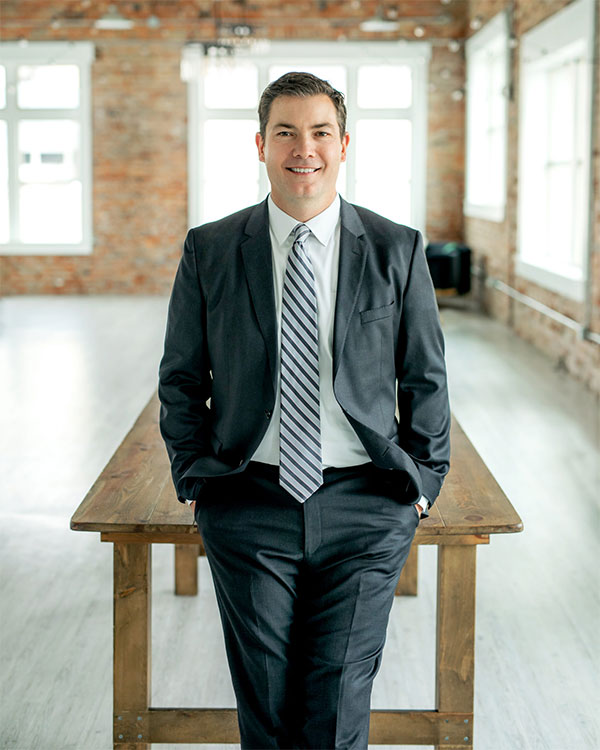
Rich Marker is an 18 year, skilled professional in metal fabrication and manufacturing. Co-founder, owner and principal of All Metals Fabrication, Rich has helped to sustain the company’s success over a variety of economic conditions. He has extensive background in continuous improvement, training and process improvement, and emotional intelligence—among other specialized proficiencies. He loves to learn, fly fish, watch college football and devour NY style pizza! He has the best family on earth, loves a good plan, great teaching and the opportunity to get better.
Learn More
